The era of AI experimentation has officially shifted toward a model of aggressive monetization. In March 2026, the latest OpenAI privacy policy update transformed ChatGPT into a massive advertising platform for its 800 million weekly active users. This transition is not merely a business model change; it represents a structural shift in how corporate data is handled at the interface and necessitates a robust AI Boundary Control strategy.
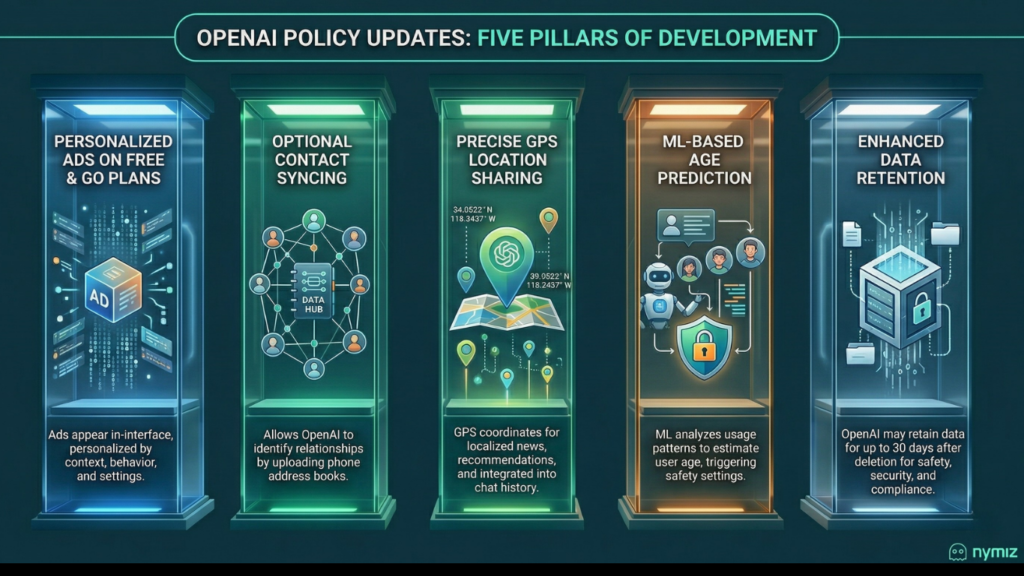
The 5 Pillars of the OpenAI Policy Shift
The recent update, effective as of early 2026, details material changes that every organization must audit immediately to ensure continued AI compliance:
The Technical Challenge: Identity vs. Intelligence
AI Feeding on “Raw Identity” The primary risk of this OpenAI privacy policy update is that organizations are inadvertently sending “raw identity” (unstructured PII like client names, specific contracts, and real phone numbers) directly into an infrastructure now connected to advertising networks and profiling systems.
As noted by the AEPD, sharing sensitive information in prompts without an intermediary control layer violates the core principles of data minimization.
“PII Debt” and Stalled AI Projects
As shown in our analysis, the challenge is not just the access to data—it is the safe use of it.
When data remains unprocessed, AI projects stall because companies fear exposing Personally Identifiable Information (PII). This creates information bottlenecks and a growing “PII Debt” in searchable systems.
Without technical evidence of protection, organizations face regulatory pressure from the EU AI Act, which mandates strict transparency for synthetic content by August 2026.
Implementing an AI Boundary Control (Privacy Firewall)
The strategic response to the new policy is to intercept the data flow at the boundary before it ever reaches OpenAI’s servers.
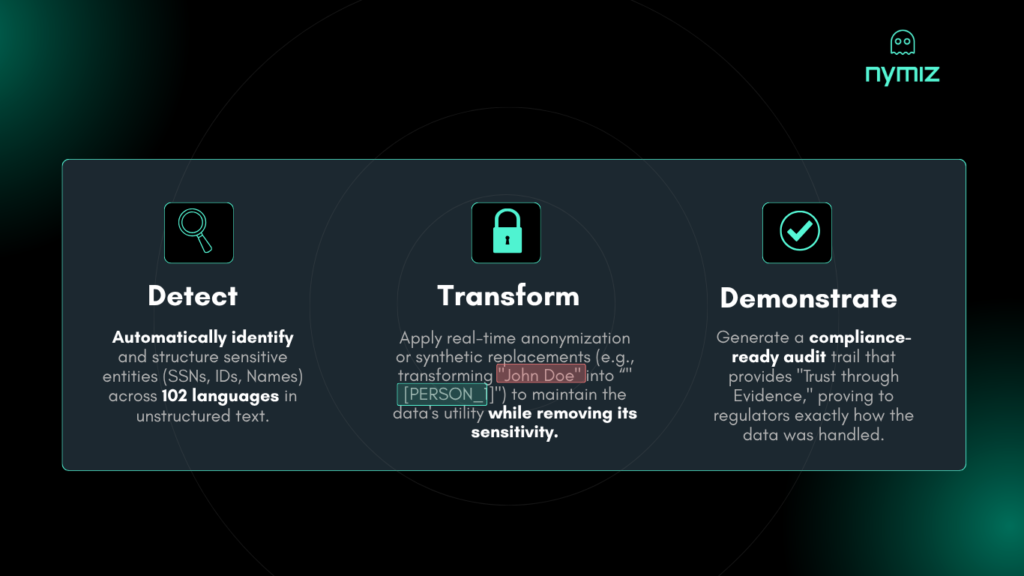
An AI Boundary Control acts as a “Privacy Firewall,” ensuring that LLMs receive only the intelligence they need, not the identity of the subjects.
By implementing an Automated Integration Flow, organizations can:
Conclusion
Do not let innovation be paralyzed by privacy concerns following the latest OpenAI privacy policy update.
By implementing an AI Boundary Control system, you can turn your sensitive data into “AI-ready assets” that are demonstrably safe, enabling your team to leverage the power of ChatGPT without compromising corporate sovereignty.